
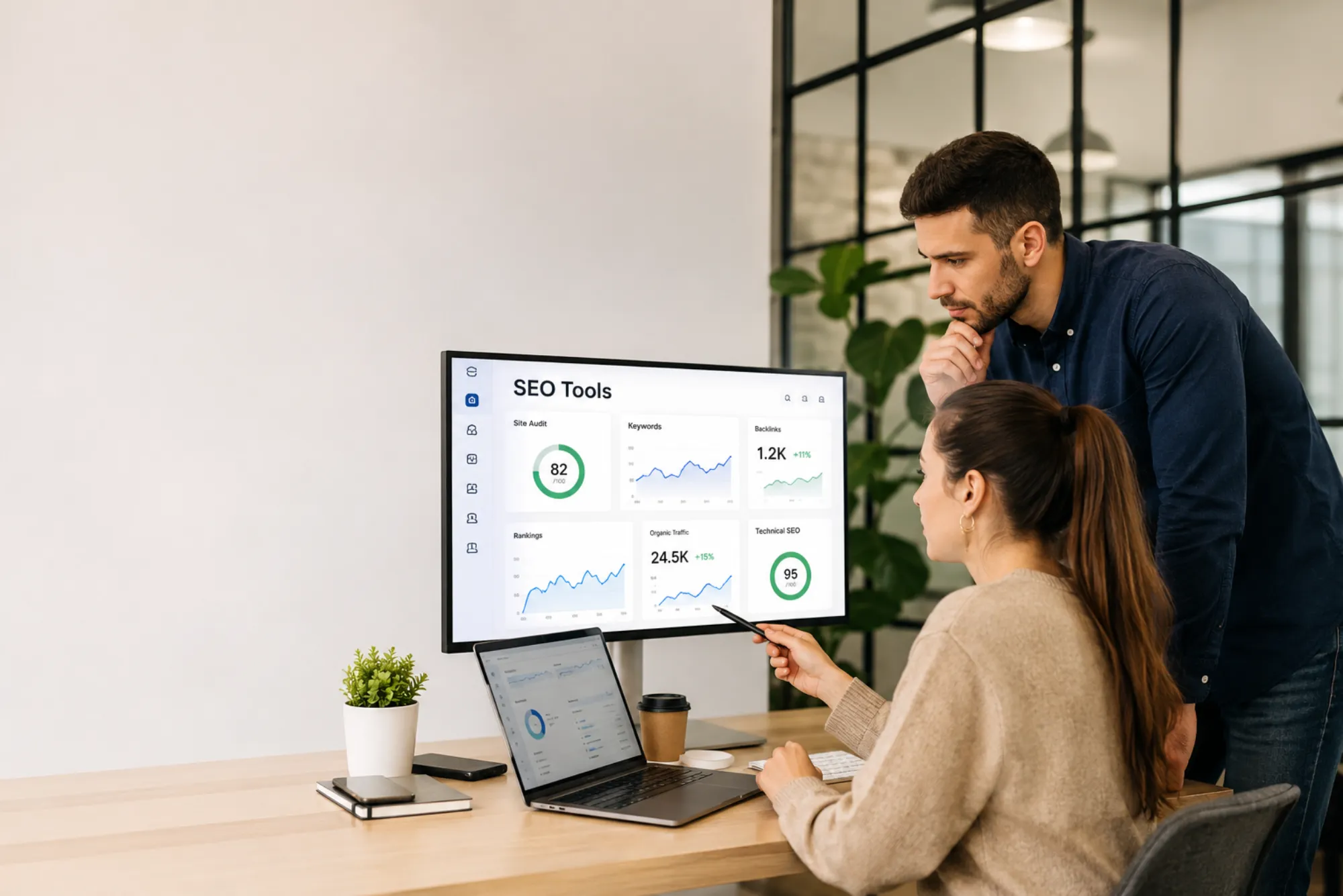
The modern web designer is no longer just a visual storyteller. They are a performance strategist, a data interpreter, and often the first line of defense against poor search visibility. With search engines prioritizing experience-driven metrics and technical performance, choosing the right tools has become less about convenience and more about competitive advantage.
The Changing Role of SEO in Web Design
Search engines have evolved into sophisticated evaluators of user satisfaction. Metrics such as loading speed, interaction responsiveness, and layout stability now influence rankings as much as traditional factors like keywords and backlinks. This evolution has pushed designers to integrate SEO considerations from the earliest stages of a project rather than treating them as post-launch fixes.
In this context, SEO tools are no longer confined to keyword tracking or backlink analysis. They now provide deep insights into how design decisions impact real-world performance. For example, understanding how a layout behaves across devices or how quickly elements render has become critical to both user engagement and search rankings.
Designers exploring broader digital strategies often find value in understanding related disciplines. Insights from resources such as advanced SEO audit practices can help bridge the gap between design and optimization, ensuring that every visual choice supports measurable outcomes.
Core Categories of SEO Tools Designers Rely On
The landscape of SEO tools has expanded significantly, but a few core categories remain central to a designer’s workflow. These tools are not isolated solutions; they often overlap, offering a holistic view of how a website performs.

- Technical analysis platforms that evaluate site structure, crawlability, and indexing issues
- Performance monitoring tools that measure speed, responsiveness, and visual stability
- Content optimization tools that guide keyword placement and readability
- User behavior analytics that reveal how visitors interact with design elements
Each category serves a distinct purpose, yet their combined insights create a comprehensive picture of how design and SEO intersect.
Why Performance Metrics Now Drive Design Decisions
In 2026, performance is not just a technical concern; it is a design priority. Tools that measure Core Web Vitals have become indispensable because they directly reflect how users experience a site. A visually stunning interface loses its impact if it loads slowly or shifts unexpectedly during interaction.
Designers are increasingly using performance-focused tools to test prototypes before development begins. This proactive approach reduces costly revisions and ensures that creative concepts translate seamlessly into functional, high-performing websites.
Authoritative platforms such as Google’s SEO Starter Guide emphasize the importance of aligning design with technical best practices, reinforcing the idea that performance and aesthetics must coexist.
Integrating UX Insights with SEO Tools
User experience has become a central ranking factor, and SEO tools now provide detailed insights into how visitors engage with a website. Heatmaps, session recordings, and interaction analytics reveal patterns that were once invisible, allowing designers to refine layouts based on actual behavior rather than assumptions.
This integration of UX and SEO is particularly valuable when optimizing navigation structures, call-to-action placements, and content hierarchy. A well-designed interface not only guides users intuitively but also signals relevance and clarity to search engines.
Designers looking to expand their understanding of digital ecosystems often explore related topics such as user retention strategies in mobile environments, which offer valuable parallels for improving engagement on web platforms.
The Rise of AI-Powered SEO Tools
Artificial intelligence has reshaped the capabilities of SEO tools, enabling them to provide predictive insights rather than just historical data. These tools can analyze patterns, suggest design improvements, and նույնիսկ anticipate how changes might impact rankings.
For web designers, this means faster decision-making and more precise optimization. AI-driven tools can recommend layout adjustments, highlight potential usability issues, and even suggest content structures that align with search intent. The result is a more efficient workflow that blends creativity with data-driven strategy.
However, reliance on automation requires careful balance. While AI can provide valuable guidance, the human element remains essential for interpreting insights and maintaining a cohesive design vision.
Features That Truly Matter in 2026
With countless tools available, it is easy to become overwhelmed by features that promise more than they deliver. In reality, only a handful of capabilities consistently prove their value for web designers.
- Real-time performance tracking that allows immediate feedback during design iterations
- Cross-device testing environments to ensure consistency across different screen sizes
- Integration with design software for seamless workflows between creation and optimization
- Actionable insights rather than raw data, enabling faster decision-making
These features reflect a broader trend toward efficiency and integration. Tools that simplify complex data into clear, actionable recommendations are becoming indispensable for designers working under tight deadlines.
Balancing Creativity with Optimization
One of the most persistent challenges for web designers is maintaining creative freedom while adhering to SEO best practices. Tools can sometimes feel restrictive, especially when they highlight limitations that conflict with a designer’s vision.
Yet, the most effective designers view these constraints as opportunities rather than obstacles. By understanding how search engines interpret design elements, they can create experiences that are both visually compelling and highly discoverable. This balance is where true expertise emerges, transforming technical requirements into creative advantages.
The Future Outlook for SEO Tools in Design
Looking ahead, the evolution of SEO tools is likely to continue along a path of deeper integration and greater automation. Designers can expect tools that not only analyze performance but also actively assist in the design process, offering real-time suggestions as layouts are created.
Voice search optimization, augmented reality interfaces, and personalized user experiences are also expected to influence the next generation of tools. These developments will further blur the lines between design and optimization, reinforcing the need for a holistic approach.
As digital ecosystems grow more complex, the ability to adapt quickly will become a defining trait of successful designers. Tools will play a crucial role in this adaptability, providing the insights needed to navigate an ever-changing landscape.
Conclusion: Why SEO Tools for Web Designers Define Success in 2026
The conversation around SEO tools for web designers is no longer about optional enhancements; it is about foundational capabilities. In 2026, the success of a website depends on how well design and optimization work together, supported by tools that provide clarity, precision, and actionable insights.
Designers who embrace these tools are better equipped to create experiences that resonate with users and perform well in search results. Those who ignore them risk falling behind in a digital environment where visibility and usability are inseparable.
Ultimately, the most important feature of any tool is its ability to empower designers to make informed decisions. When used effectively, SEO tools become more than just software; they become strategic partners in the pursuit of exceptional digital experiences.
FAQs
What makes SEO tools essential for web designers today?
SEO tools provide insights into performance, usability, and search visibility, helping designers create websites that meet both user expectations and search engine requirements.
Are SEO tools difficult for designers to learn?
Most modern tools are designed with user-friendly interfaces, making them accessible even for those without a technical background.
Can SEO tools replace the need for SEO specialists?
While they empower designers, SEO specialists still play a critical role in strategy and advanced optimization.
How often should designers use SEO tools during a project?
Ideally, SEO tools should be used throughout the entire design process, from initial planning to post-launch monitoring.
Do all SEO tools offer the same features?
No, tools vary significantly in capabilities, so choosing the right combination depends on specific project needs and goals.
Related Reading: المسح الأرضي: أفضل الممارسات — full guide
Related Reading: المايونيز: طريقة سهلة وفعالة — full guide
Related Reading: طب الأسنان – رعاية شاملة لابتسامة صحية وجميلة
Related Reading: Best AC for hot weather countries — full guide
Related Reading: How to Train a Dog to Walk Beside a Stroller Without Pulling or Lunging — full guide