Introduction
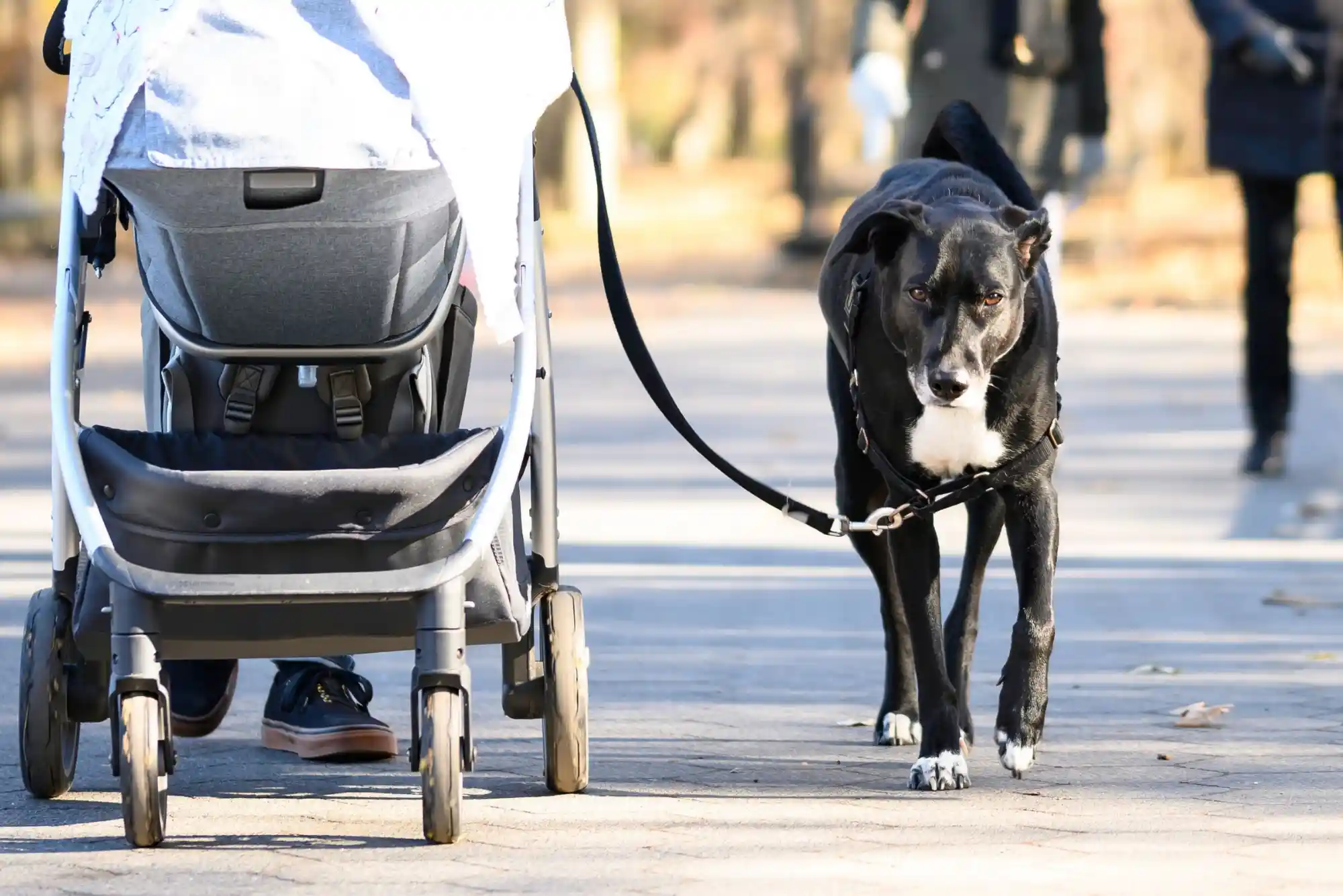
Taking your dog for a walk while pushing a stroller can be a wonderful way to enjoy time outdoors as a family. However, learning how to train a dog to walk beside a stroller requires more than simply attaching a leash and heading outside. A dog that normally walks well may become distracted, excited, nervous, or frustrated when a stroller is introduced.
The wheels, movement, unfamiliar sounds, changing pace, and limited space can make an ordinary walk feel completely different to your dog. If your dog pulls toward the stroller, crosses in front of it, stops suddenly, or lunges at people, dogs, bicycles, or other distractions, the situation can quickly become difficult and potentially unsafe.
The good news is that these behaviours can usually be improved through gradual training and positive reinforcement. The goal isn’t to force your dog into a perfect heel. Instead, you want your dog to understand that walking calmly beside the stroller is rewarding and predictable.
For broader guidance on responsible pet ownership, you can also explore this Animal Welfare & Care Guide, which provides useful information about caring for animals responsibly.
Why Training a Dog to Walk Beside a Stroller Matters
A stroller changes the physical environment around your dog. Instead of having your full attention available, one of your hands may be occupied with the stroller while your dog walks beside you.
That means reliable leash manners become particularly important.

A dog that suddenly pulls can make the stroller veer off course. A dog that darts across the front wheel can create a tripping hazard, while lunging toward another dog or pedestrian may cause you to lose control.
Training your dog to walk beside a stroller gives them a clear job: stay near you, keep the leash reasonably loose, and respond when you change direction or ask for attention.
The American Kennel Club recommends rewarding appropriate loose-leash behaviour and stopping movement when a dog pulls rather than allowing pulling to get the dog where it wants to go.
How to Train a Dog to Walk Beside a Stroller Step by Step
Start Without the Stroller
Before combining stroller walking with leash training, make sure your dog understands basic loose-leash walking.
Practice in a quiet area where there are few distractions. Reward your dog whenever they remain close to you with a loose leash. You can use small treats, verbal praise, or access to something your dog enjoys, such as sniffing an interesting patch of grass.
If your dog pulls, stop moving. Wait for the leash to loosen or encourage your dog to return to your side. Once the leash becomes slack, reward them and continue.
This teaches a simple but important lesson: pulling does not make the walk continue, while calm behaviour does.
Introduce the Stroller While It Is Stationary
Don’t immediately start pushing the stroller down a busy pavement.
Instead, place the stroller somewhere familiar and allow your dog to investigate it from a comfortable distance. Let your dog sniff it without forcing them closer.
Reward calm behaviour around the stroller. If your dog looks at it calmly, reward them. If they approach without barking or jumping, reward them again.
The objective is to make the stroller an ordinary part of the environment rather than something exciting or threatening.
Practise Walking Beside an Empty Stroller
Once your dog is comfortable around the stationary stroller, begin moving it slowly.
Walk a few steps with your dog beside you while pushing the empty stroller. Keep the session short. You don’t need to complete a full walk on the first attempt.
If your dog stays beside you, offer praise and treats. If they move ahead and tighten the leash, stop. Wait until they return or the leash loosens before moving again.
This follows the same basic loose-leash principle recommended by the AKC: the dog learns that a slack leash allows forward movement, while pulling causes movement to pause.
Teach a Reliable “Let’s Go” Cue
A verbal cue can make stroller walks much easier.
Choose a simple phrase such as “Let’s go,” “With me,” or another cue your dog understands. Say it happily and begin moving. When your dog follows without pulling, reward them.
Over time, your dog should associate the cue with calmly moving alongside you.
You can also introduce a direction-change cue such as “Turn.” Practise turning away from distractions in a quiet environment before expecting your dog to respond perfectly outdoors.
The AKC recommends clear cues such as “Let’s go” or “With me” to communicate that the dog should move together with the handler.
How to Stop Pulling During Stroller Walks
Pulling is one of the biggest challenges when learning how to train a dog to walk beside a stroller.
The most important thing is not to accidentally reward it.
Suppose your dog sees something interesting and pulls forward. If you continue walking while the leash is tight, your dog learns that pulling works. Instead, stop moving and wait for the tension to disappear.
As soon as your dog returns their attention to you or relaxes the leash, reward them and continue.
Avoid getting into a physical tug-of-war with your dog. Pulling back on the leash can encourage the dog to pull in the opposite direction, making the problem harder to solve. The AKC specifically recommends avoiding leash tug-of-war and teaching the dog that walking on a loose leash is more rewarding.
How to Prevent Lunging Beside a Stroller
Lunging requires extra attention because it can happen suddenly.
Your dog may lunge because they are excited about another dog, frightened by a person, interested in a bicycle, or overwhelmed by the environment. The reason matters because simply correcting the behaviour after it happens doesn’t teach the dog what to do instead.
Create More Distance
If your dog regularly lunges at other dogs, don’t deliberately walk close to them during early training.
Instead, increase the distance. Cross the street, step onto a wider section of pavement, or change direction before your dog becomes overwhelmed.
The farther away your dog is from the trigger, the easier it may be for them to listen to you.
Reward Attention Before the Lunge
Don’t wait until your dog is already lunging.
Watch their body language. If they notice another dog but can still look at you, immediately reward that choice.
You are teaching your dog that seeing a distraction does not automatically mean charging toward it.
For dogs with significant leash reactivity or aggression, professional help from a qualified positive-reinforcement trainer or veterinary behaviour professional can be appropriate. The AKC notes that tightening the leash or applying corrections around triggers can sometimes contribute to frustration and other leash-related problems.
Teach Your Dog to Ignore the Stroller Wheels
Some dogs become fascinated by moving wheels.
They may try to follow the front wheels, sniff underneath the stroller, or move across its path. This behaviour should be addressed before taking longer walks.
Start by moving the stroller very slowly while your dog remains several feet away. Reward your dog for watching it without chasing.
Gradually decrease the distance as your dog’s confidence improves.
Never allow your dog to walk directly in front of the stroller. Establish a consistent position beside you so that the dog understands where they should be while the stroller is moving.
Use the Right Equipment
Good equipment cannot replace training, but it can make training safer and easier.
A properly fitted harness may be useful for dogs that tend to pull, particularly because it avoids relying entirely on pressure around the neck. The AKC notes that a properly fitted harness can be an option during leash training and recommends equipment that allows the handler to maintain control.
Use a standard leash that gives you sufficient control without excessive length. Retractable leashes are generally not ideal during the early stages of stroller training because they can give a pulling dog additional freedom and make sudden movements harder to manage.
Check the harness fit regularly. Your dog should be comfortable, and the equipment should not restrict normal movement or allow an easy escape.
For additional information about responsible animal care, Alkhayre offers resources focused on animal welfare and responsible care.
Build Up Distractions Gradually
A common mistake is expecting a dog that behaves perfectly in the garden to immediately behave the same way on a crowded pavement.
Dogs don’t automatically generalise a skill to every environment.
Once your dog can walk calmly beside an empty stroller at home, gradually introduce more challenging situations. You might practise on a quiet residential street before moving to a busier area.
Increase only one difficulty at a time. If the environment becomes too overwhelming, return to an easier location.
The AKC similarly recommends beginning loose-leash training in areas with fewer distractions before gradually practising around more exciting environments.
Keep Stroller Training Sessions Short
You don’t need to spend an hour practising.
Five or ten minutes of successful training can be much more productive than a long walk filled with pulling and frustration.
Finish while your dog is still doing well. This helps maintain a positive association with stroller walking.
As your dog’s skills improve, gradually increase the length of your walks.
Consistency matters more than marathon training sessions. Regular short practice sessions help reinforce the behaviour without overwhelming either you or your dog.
Give Your Dog Opportunities to Sniff
Walking beside a stroller does not mean your dog needs to march rigidly beside you for the entire outing.
Sniffing is an important form of environmental enrichment. Allowing your dog to investigate appropriate smells can make walks more enjoyable and can provide a useful reward for good leash behaviour.
For example, after your dog walks calmly beside the stroller for a short distance, you might give them permission to sniff a safe area.
The AKC recommends using enjoyable activities such as sniffing as life rewards while teaching loose-leash walking.
What to Do If Your Dog Suddenly Pulls or Lunges
Even a well-trained dog can have an unexpected reaction.
If your dog suddenly pulls, stay calm and stop the stroller if necessary. Regain control of your dog’s attention before continuing.
If your dog lunges toward another dog or person, create distance rather than trying to force them to remain close to the trigger.
Once your dog has settled, reward calm behaviour and continue only if it is safe to do so.
Never allow a difficult moment to turn into a physical struggle between you, the dog, and the stroller.
If your dog is powerful, unpredictable, or repeatedly lunges aggressively, avoid busy stroller walks until you have professional guidance.
Common Mistakes to Avoid
One of the biggest mistakes is introducing too much stimulation too quickly. A dog that has never walked beside a stroller may need several sessions before they are comfortable.
Another mistake is rewarding pulling unintentionally. If your dog pulls and you keep walking because you are in a hurry, your training becomes inconsistent.
Avoid constantly tightening the leash, shouting at your dog, or using harsh corrections. These responses can increase frustration and may make certain triggers more emotionally significant.
Finally, don’t expect your dog to maintain a perfect heel throughout an entire outing. The realistic goal is calm, safe, loose-leash walking with the ability to respond to your cues.
For broader professional guidance on safe stroller walking and dog behaviour, you can also explore the AKC Stroller Walking Guidelines.
How Long Does It Take to Train a Dog to Walk Beside a Stroller?
There is no universal timeline.
A dog with strong loose-leash skills may adapt within several short sessions, while a dog that pulls, lunges, or becomes easily overstimulated may need weeks or longer.
Age, temperament, previous training, environment, and the intensity of the dog’s reactions all influence progress.
Instead of measuring success by the number of days, look for small improvements. Your dog might initially walk five calm steps and later manage fifty. Those small gains are meaningful.
Make Stroller Walking a Positive Skill
Learning how to train a dog to walk beside a stroller is ultimately about communication, preparation, and consistency. Your dog needs to understand where to walk, what behaviour earns rewards, and how to respond when something exciting appears.
Start without the stroller, introduce it gradually, reward calm behaviour, and practise loose-leash walking before adding busy environments. When pulling occurs, stop rather than allowing the behaviour to move the dog forward. When your dog notices a distraction without lunging, reward that decision.
Most importantly, give your dog time to learn. A calm stroller walk is not achieved by forcing a dog to behave; it is built through repeated experiences in which walking safely beside you becomes the most rewarding choice.
FAQs
How do I stop my dog from pulling on the leash?
Stop moving whenever the leash becomes tight and wait for your dog to return or create slack. Reward the loose leash and then continue walking. This teaches the dog that pulling does not move the walk forward.
How do I teach my dog to walk nicely beside me?
Start somewhere quiet and reward your dog for staying near you with a loose leash. Gradually increase the duration and introduce distractions as your dog becomes more reliable. Loose-leash walking is a learned skill rather than something dogs automatically understand.
Why does my dog lunge at other dogs while on a leash?
Lunging can have different causes, including excitement, fear, frustration, or over-arousal. Creating distance and rewarding calm attention can help, while persistent or severe reactions may require guidance from a qualified professional.
Should I use a harness for a dog that pulls?
A properly fitted harness can be a useful management and training tool, especially for dogs that pull strongly. It should complement training rather than replace it. The equipment should fit comfortably and allow normal movement.
Can I take my puppy walking beside a stroller?
Yes, but introduce the stroller gradually and consider your puppy’s vaccination status, confidence, physical development, and ability to walk comfortably. Begin with short, controlled training sessions rather than a long outing.
Should a dog heel next to a stroller the entire time?
Not necessarily. A relaxed loose leash is usually a more practical goal than formal heelwork. Your dog should remain safely beside you without pulling, while still having appropriate opportunities to sniff and explore.