Introduction
Walking a powerful dog can be enjoyable until your dog decides that every walk is a competition. Pitbulls, Boxers, and other strong pullers can generate impressive forward force, especially when they see another dog, a squirrel, a cyclist, or something else they want to investigate. That is why choosing the best heavy duty no-pull harnesses for Pitbulls, Boxers, and strong pullers is about much more than buying the thickest or toughest-looking harness available.
A well-designed harness should provide reliable control while remaining comfortable enough for everyday use. It should distribute leash pressure across the dog’s body rather than relying entirely on the neck, and it should stay securely positioned when the dog changes direction. Most importantly, a harness should support training rather than replace it. Even the strongest equipment cannot teach a dog loose-leash walking by itself.
For owners dealing with powerful dogs, the right combination of equipment, fit, patience, and reward-based training can make walks safer and significantly less stressful.
Why Strong Pullers Need a Heavy Duty No-Pull Harness
A strong dog does not necessarily need a restrictive harness. What matters is having equipment capable of handling the dog’s strength while giving the handler better mechanical control.
A heavy duty no-pull harness generally uses stronger webbing, reinforced attachment points, durable buckles, and a construction designed to withstand repeated tension. These characteristics become especially important when a dog regularly lunges, pulls toward distractions, or tries to back out of equipment.
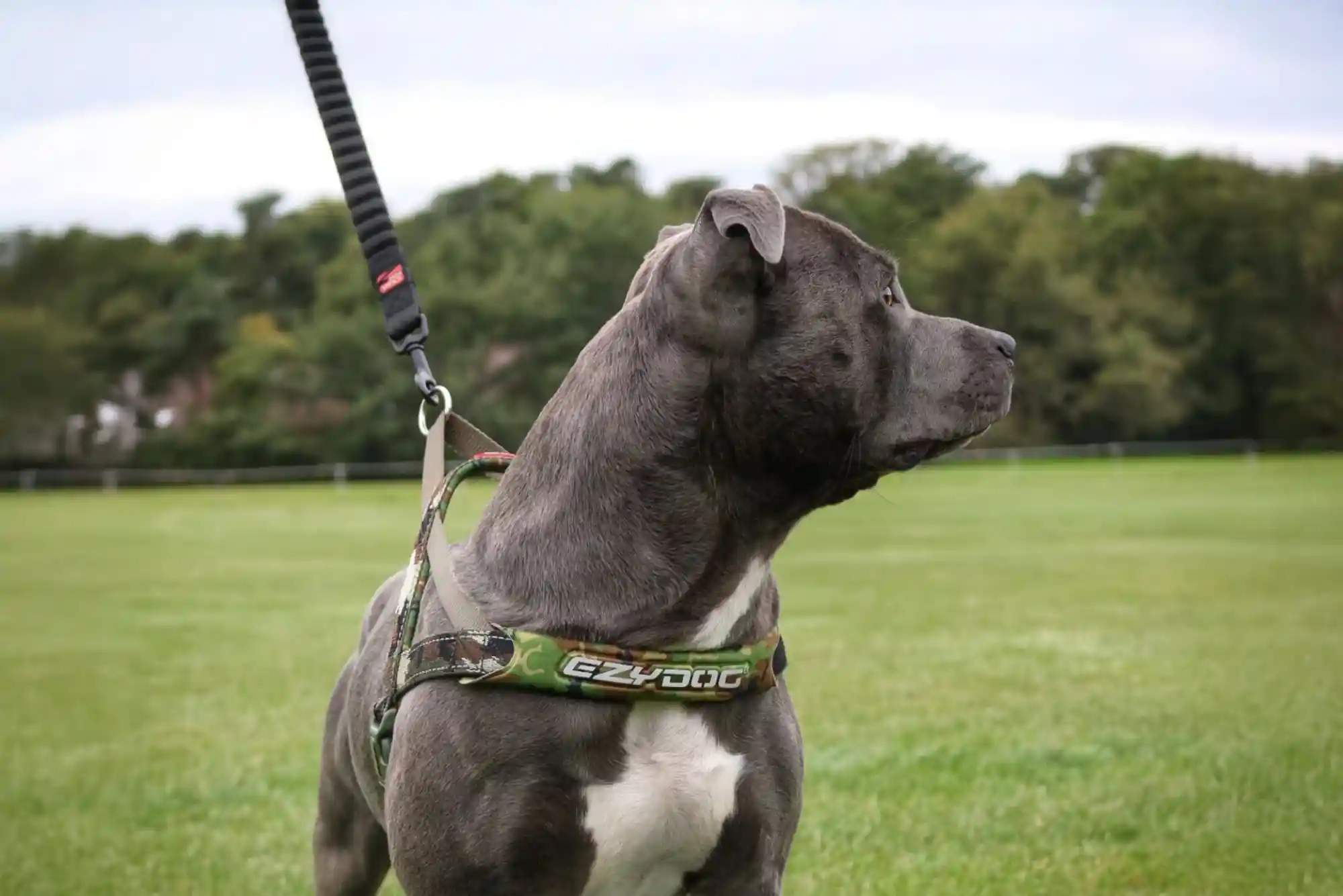
The “no-pull” part is equally important. A front attachment point can help redirect a dog’s forward momentum toward the handler. Instead of allowing the dog to lean directly into the leash and continue driving forward, the harness changes the direction of that force.

However, this does not mean a no-pull harness automatically stops pulling. Pulling is a learned behavior in many dogs, and equipment works best when combined with consistent training. Reward-based loose-leash training can teach the dog that staying near the handler is more rewarding than constantly moving ahead.
What Makes the Best Heavy Duty No-Pull Harnesses Different?
The best heavy duty no-pull harnesses balance strength, control, comfort, and fit. A harness can be extremely durable but still be a poor choice if it rubs the dog’s armpits or restricts shoulder movement.
Durable Materials and Reinforced Construction
Strong dogs put substantial stress on leash attachment points. Look for quality webbing, secure stitching, dependable buckles, and reinforced areas around the D-rings.
Hardware should feel substantial without making the harness unnecessarily heavy. Metal attachment points can provide excellent durability, while high-quality polymer buckles can also be reliable when properly designed and maintained.
For a powerful Pitbull or Boxer, examine the stitching around the leash attachment point carefully. This is one of the areas that receives the greatest amount of force during sudden pulling or lunging.
A Reliable Front-Clip Attachment
A front-clip attachment is one of the most useful features for dogs that consistently pull forward.
When the leash is attached to the chest area, forward movement can be redirected sideways rather than allowing the dog to put their entire body weight behind the leash. This gives the handler more leverage and can make training easier.
Some harnesses also offer both front and back attachment points. A dual-clip design can be particularly useful because owners can select the attachment method according to the dog’s behavior and the walking environment.
Secure Fit Without Restricting Movement
A harness should be snug enough that the dog cannot easily escape but loose enough to allow comfortable breathing and natural movement.
The fit around the chest and shoulders deserves particular attention. A poorly positioned harness can rub against the armpits or interfere with the dog’s stride. This becomes even more important with muscular breeds because their body shape can change significantly around the shoulders and chest.
After fitting the harness, watch your dog walk, turn, sit, and sniff. The harness should remain stable rather than shifting dramatically from side to side.
Best Heavy Duty No-Pull Harnesses for Pitbulls
Pitbulls are muscular, athletic, and often surprisingly agile. A harness that looks strong on the shelf may not be strong enough for a determined dog that suddenly launches toward a distraction.
For Pitbull owners, a good harness should have reinforced leash attachment points and durable adjustment hardware. A front-clip option is especially useful when the main goal is reducing forward pulling during training.
What Pitbull Owners Should Prioritize
Because Pitbulls can have broad chests and powerful shoulders, owners should measure the chest girth carefully rather than selecting a harness based only on weight or breed.
The harness should sit securely across the chest without pressing into the throat. It should also provide enough adjustment to accommodate the dog’s individual proportions.
Escape resistance is another important consideration. If your dog has learned how to reverse out of ordinary harnesses, look for a design that provides secure coverage while still allowing unrestricted movement.
A durable harness should also be inspected regularly. Even excellent equipment can deteriorate after repeated exposure to moisture, dirt, chewing, and high tension.
Best Heavy Duty No-Pull Harnesses for Boxers
Boxers bring a different challenge. They are powerful, energetic, playful, and often highly enthusiastic about their surroundings. A Boxer may not pull continuously but can suddenly surge forward when something catches their attention.
This makes control and stability particularly important.
Why Chest Fit Matters for Boxers
Boxers have a distinctive chest and body shape, so generic sizing can sometimes be misleading. Measure the dog’s girth according to the manufacturer’s instructions and then check how the harness sits while the dog moves.
A good harness should stay centered rather than sliding toward one shoulder. If it shifts during normal walking, it may need adjustment or a different design.
For Boxers that lunge or become overexcited, a front-clip or dual-clip harness can provide useful directional control while training.
Choosing a Harness for Extremely Strong Pullers
Some dogs are simply stronger than their owners. A determined large or muscular dog can make ordinary walking equipment difficult to manage, particularly when the handler is surprised by a sudden lunge.
For these dogs, strength alone is not the solution.
The best approach combines a durable harness with leash-training skills and appropriate management. Your equipment should give you enough control to respond calmly without relying on painful corrections.
A practical training resource is the Whole Dog Journal Pulling Prevention, which provides broader information about preventing and managing leash-pulling behavior.
How to Fit a Heavy Duty No-Pull Harness Correctly
Even the best heavy duty no-pull harnesses can become ineffective if the fit is wrong.
Start by measuring your dog’s chest at the widest part of the rib cage. Follow the manufacturer’s specific measurement instructions because sizing systems differ between brands.
Once the harness is on, check the straps around the chest and body. They should be secure without digging into the skin.
Check for Chafing
Pay particular attention to the areas behind the front legs. If the harness repeatedly rubs against the armpits, redness, hair loss, or irritation can develop.
A short test walk is useful before committing to longer outings. Examine the dog’s skin afterward and watch for signs of discomfort.
Check for Escape Risk
A harness that is too loose may allow a determined dog to reverse out of it. Have your dog walk, turn, sit, and back up while you observe whether the harness remains securely positioned.
Do not assume that a harness marketed as “escape-proof” is automatically secure for every dog. Individual body shape and correct adjustment matter.
How to Stop a Strong Dog From Pulling
Equipment should support training rather than become a substitute for it.
Begin in a low-distraction environment. Reward your dog whenever the leash remains loose and the dog chooses to stay near you. Gradually introduce more challenging environments as your dog’s skills improve.
If your dog reaches the end of the leash, avoid turning the walk into a physical contest. Instead, stop, regain attention, and reward the dog when the leash becomes loose.
Over time, the dog learns that pulling does not reliably produce forward movement, while walking calmly keeps the walk going.
This approach requires consistency. If pulling sometimes gets the dog to a desired destination and sometimes does not, the behavior can become particularly persistent.
No-Pull Harness vs. Regular Harness
A regular back-clip harness can be comfortable for dogs that already walk politely. The leash attaches over the back, making it easy to put on and convenient for everyday walks.
A no-pull harness is more training-oriented. A front attachment point can redirect forward momentum and give the handler more control.
Neither style is automatically better for every dog. A calm dog may not need a specialized no-pull design, while a powerful dog that regularly pulls can benefit from the additional control.
The important question is not whether a harness is labelled “no-pull.” Ask whether its construction, attachment points, fit, and purpose match your dog’s actual walking behavior.
Comfort Should Matter as Much as Strength
It is tempting to choose the most heavily reinforced harness possible for a strong dog. But excessive bulk can make equipment uncomfortable and may discourage the dog from walking naturally.
A good heavy duty harness should feel secure without becoming unnecessarily restrictive.
Padding can help in areas where straps contact the body. Breathable materials may be preferable for dogs that walk in warm weather, while reflective details can improve visibility during low-light outings.
Your dog’s response is valuable feedback. If they repeatedly scratch at the harness, freeze when it is presented, or move awkwardly after putting it on, investigate the fit and construction rather than assuming the behavior is stubbornness.
Harness Safety and Animal Welfare
Strong-dog equipment should always be approached from a safety and welfare perspective. The purpose of a harness is to help manage the dog, not to punish them.
Avoid using excessive force when a dog pulls. A durable harness should allow the handler to redirect the dog without resorting to harsh corrections.
For broader guidance on responsible pet care and animal welfare, visit the Animal Welfare & Care Guide. You can also explore Alkhayre for additional animal-related resources.
Responsible walking also means checking your equipment regularly. Examine stitching, buckles, clips, adjustment points, and leash attachments for wear. Replace damaged equipment before it fails.
Do Heavy Duty No-Pull Harnesses Really Work?
They can help significantly, but expectations matter.
A no-pull harness changes the mechanics of walking and can give the handler better control. That can make training easier and reduce the dog’s ability to use their full body weight against the leash.
But a harness does not teach a dog why pulling is undesirable. Training remains essential.
Think of the harness as part of a larger system. The equipment provides physical management while training teaches the behavior you actually want.
For a strong puller, that combination is much more effective than searching for a harness that promises to solve every walking problem on its own.
When to Consider Professional Training
If your dog is so powerful that you cannot safely control them, professional assistance is worthwhile.
This is especially important when pulling is accompanied by lunging, intense reactivity, snapping, or attempts to escape. A qualified reward-based trainer can assess what is triggering the behavior and develop a plan suited to your individual dog.
Safety comes first. If you cannot physically maintain control during a walk, do not repeatedly expose yourself, your dog, or other people to situations that could result in an accident.
Choosing the Right Harness for Your Strong Dog
Finding the best heavy duty no-pull harnesses for Pitbulls, Boxers, and strong pullers requires more than choosing the toughest-looking product. The ideal harness combines durable construction, secure attachment points, appropriate no-pull functionality, and a comfortable fit.
For powerful dogs, a front-clip or dual-clip design can provide useful control, while reinforced materials help the equipment withstand everyday use. But the harness should always work alongside calm, consistent leash training.
Before your next purchase, measure your dog carefully, assess their walking behavior, inspect the construction, and test the fit in a controlled environment. Most importantly, treat the harness as a training aid rather than a replacement for good behavior.
With the right equipment and a patient approach, even a very strong puller can learn to enjoy calmer, more manageable walks. Choose a harness that prioritizes safety, comfort, and control, then pair it with consistent training to build better walking habits.
FAQs
What is the best harness for a dog that pulls?
A front-clip or dual-clip harness is often a good choice for a dog that pulls because the leash attachment can redirect forward momentum. However, correct fit and consistent loose-leash training are just as important as the harness design. This question is commonly surfaced in People Also Ask-style leash-training searches.
Do no-pull harnesses really work?
Yes, they can improve handling and reduce a dog’s mechanical advantage when pulling, but they do not automatically teach loose-leash behavior. Training and reinforcement should be used alongside the harness.
Are harnesses better than collars for strong pullers?
A properly fitted harness can be preferable for strong pullers because it distributes leash pressure across the body rather than concentrating it around the neck. The best choice depends on the individual dog’s health, behavior, body shape, and training needs.
What size harness should I get for a Pitbull?
Do not choose solely by breed. Measure the dog’s chest girth and follow the manufacturer’s sizing chart. Pitbulls can vary considerably in build, so individual measurements are more reliable than a generic breed size.
Can a Boxer wear a no-pull harness every day?
A well-fitted harness can be used for everyday walks, provided it does not rub, restrict movement, or cause discomfort. Check the skin and straps regularly, particularly around the chest and behind the front legs.
How do I stop my strong dog from pulling on walks?
Use reward-based loose-leash training, reinforce calm walking, and avoid allowing pulling to consistently result in forward movement. A front-clip harness can make the physical management aspect easier while your dog learns the desired behavior.
What should I look for in a heavy duty dog harness?
Look for durable webbing, strong stitching, secure hardware, reliable leash attachment points, adjustability, and a design that fits your dog’s body without restricting natural movement. For strong pullers, stability and escape resistance are particularly important.
Related Reading: How to Train a Dog to Walk Beside a Stroller Without Pulling or Lunging
Related Reading: Can Dogs Eat Apples, Bananas, and Carrots? Fiber Benefits and Choking Hazard Prevention — full guide
Related Reading: Feline Hyperthyroidism: Weight Loss with Increased Appetite Symptoms and Treatment — full guide
Related Reading: Best AC for hot weather countries
Related Reading: المسح الأرضي: أفضل الممارسات — full guide