Introduction
A reliable air conditioning system is essential for offices and commercial buildings. Employees need a comfortable working environment, customers expect pleasant indoor temperatures, and businesses depend on climate control to protect equipment and maintain productivity. Without regular servicing, even a high-quality AC system can gradually lose efficiency, develop faults, consume more electricity, and eventually require expensive repairs.
Following practical AC maintenance tips can help commercial property owners and facility managers prevent these problems. Routine inspections, filter cleaning, refrigerant checks, airflow testing, electrical inspections, and professional servicing all contribute to better system performance.
Commercial AC systems are also more demanding than residential units because they often operate for long hours and serve larger spaces. A consistent maintenance schedule is therefore not simply an optional expense. It is an important part of protecting the building’s cooling infrastructure and controlling long-term operating costs.
Why AC Maintenance Matters in Commercial Buildings
Regular AC maintenance keeps cooling equipment operating closer to its intended performance. Dust, blocked filters, dirty coils, damaged components, and poor airflow can force an air conditioner to work harder than necessary.
Improved Energy Efficiency
A poorly maintained system may require longer operating cycles to reach the desired temperature. Clean filters and coils allow air to move more efficiently, reducing unnecessary strain on the equipment.
For a large office, even a modest decline in efficiency can increase monthly energy consumption. Regular maintenance helps identify issues before they become major sources of wasted electricity.

Better Indoor Comfort
Uneven cooling is a common complaint in commercial buildings. One office may feel comfortable while another remains warm. This can result from blocked filters, dirty coils, inadequate airflow, duct problems, incorrect thermostat settings, or an improperly balanced system.
Professional AC maintenance tips focus not only on whether the unit is running but also on whether it is distributing conditioned air effectively throughout the property.
Longer Equipment Lifespan
Air conditioning equipment represents a significant investment. Replacing compressors, motors, control boards, or complete systems can be costly.
Preventive maintenance allows technicians to identify wear and developing faults early. Addressing smaller problems before they become major failures can help extend the useful life of commercial cooling equipment.
Create a Regular AC Maintenance Schedule
One of the most important AC maintenance tips for commercial buildings is to establish a consistent service schedule rather than waiting until something stops working.
Schedule Professional Inspections
Commercial AC equipment should be professionally inspected at appropriate intervals based on system type, operating hours, building conditions, and manufacturer recommendations.
A technician can examine components that are difficult or unsafe for untrained staff to inspect. This may include electrical connections, refrigerant levels, motors, coils, drainage systems, controls, and operating pressures.
High-use buildings may require more frequent attention, particularly when air conditioning operates throughout most of the year.
Keep Maintenance Records
A maintenance record can make future servicing much easier. Facility managers should keep information about previous inspections, repairs, replaced components, filter changes, unusual noises, performance issues, and recurring faults.
These records help technicians identify patterns and determine whether a component is approaching the end of its service life.
Replace and Clean Air Filters Regularly
Air filters are among the simplest components to maintain, but they have a major effect on commercial AC performance.
Why Dirty Filters Cause Problems
When filters become clogged with dust and debris, airflow can become restricted. The system may then need to operate for longer periods to achieve the thermostat setting.
Restricted airflow can also contribute to reduced cooling performance and unnecessary stress on fans and other components.
The appropriate filter replacement interval depends on the filter type, indoor air quality, occupancy, building usage, and surrounding environment. Offices with high foot traffic or significant dust exposure may need more frequent attention.
Check Filters Between Professional Visits
Facility staff can visually inspect accessible filters as part of routine building checks. However, filter replacement should follow the equipment manufacturer’s requirements and the recommendations of a qualified HVAC professional.
Keep Evaporator and Condenser Coils Clean
Coils play a central role in the cooling process. Over time, dust and debris can accumulate on them, reducing heat transfer.
Clean Indoor Coils
Dirty evaporator coils can restrict heat exchange and reduce cooling performance. Moisture and dirt can also contribute to unpleasant indoor air quality if the system is neglected.
Professional cleaning is particularly important when coils are heavily contaminated or difficult to access.
Protect Outdoor Condenser Units
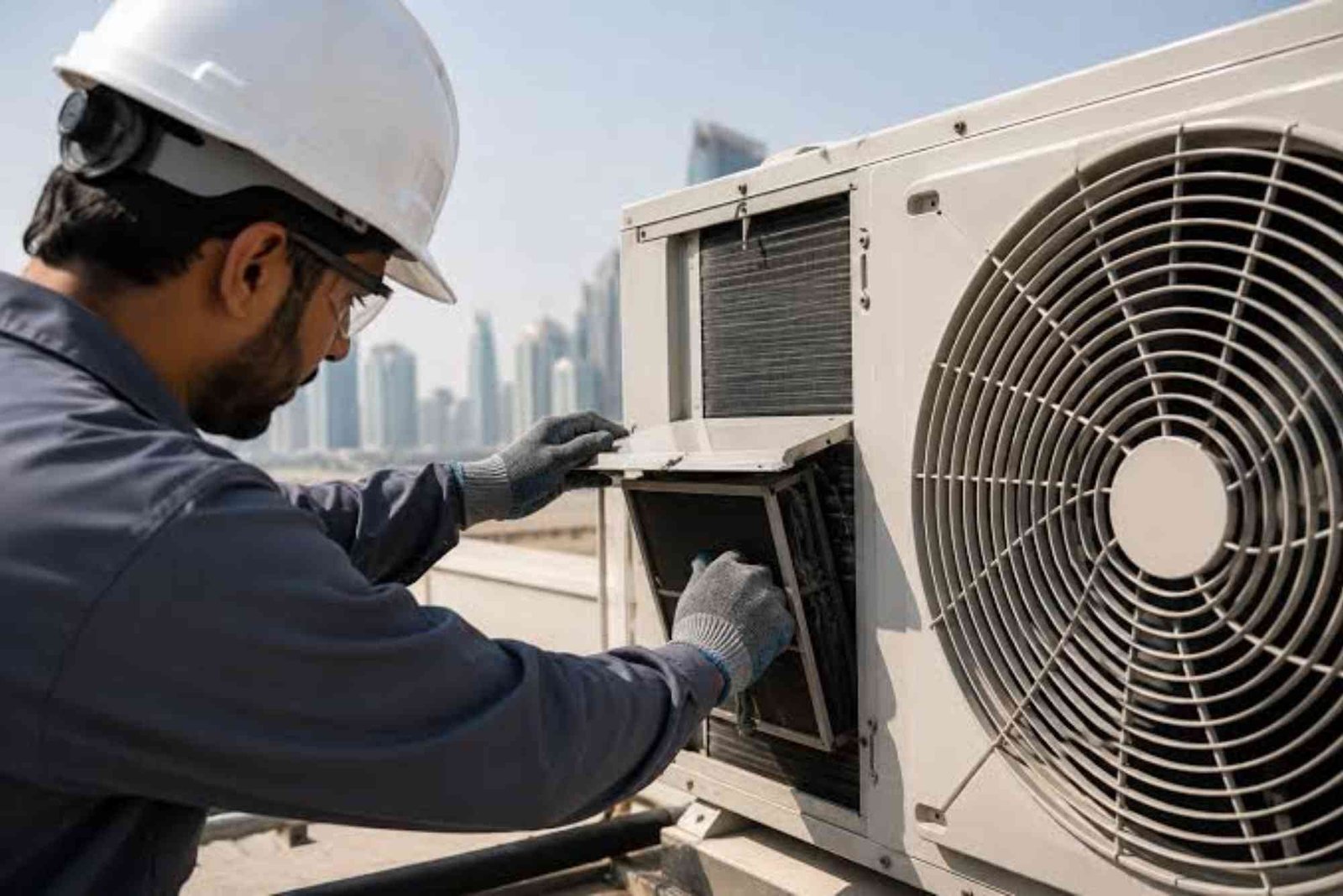
Outdoor condenser units require sufficient space for airflow. Leaves, dirt, packaging materials, vegetation, and other debris should not be allowed to obstruct the surrounding area.
Building maintenance teams should make sure that outdoor units remain clear without attempting complex cleaning or repairs that require specialist knowledge.
Inspect Airflow and Ductwork
Good cooling depends on effective air distribution. A powerful AC unit cannot perform properly if conditioned air cannot move efficiently through the building.
Look for Uneven Cooling
Hot and cold spots can indicate airflow problems. Rooms that consistently feel warmer than others may have blocked vents, damaged ductwork, poor balancing, inadequate insulation, or other HVAC issues.
A professional assessment can help determine the actual cause rather than simply lowering the thermostat.
Check Ducts for Leaks
In ducted commercial systems, leaks can allow conditioned air to escape before reaching occupied areas. This wastes energy and may make some parts of the building uncomfortable.
Regular duct inspections can identify damaged sections, loose connections, deteriorated insulation, and other problems affecting system performance.
Monitor Refrigerant and Cooling Performance
Refrigerant is critical to the cooling cycle. If a system has insufficient refrigerant, it may not cool effectively and could operate under abnormal conditions.
Do Not Treat Refrigerant as a Routine Top-Up
Low refrigerant can indicate a leak or another underlying problem. Simply adding refrigerant without investigating the cause may only provide a temporary improvement.
Refrigerant-related work should be handled by qualified HVAC professionals using appropriate equipment and procedures.
Watch for Warning Signs
Commercial property managers should take note of declining cooling performance, unusually long operating cycles, ice formation, strange sounds, or noticeable changes in temperature control.
These symptoms do not always mean the same thing, so professional diagnosis is preferable to guessing at the cause.
Inspect Electrical and Mechanical Components
Electrical and mechanical problems can cause sudden AC failures and may create safety risks if ignored.
Check Electrical Connections
Professional maintenance should include inspection of relevant electrical connections, controls, contactors, capacitors, and other components according to the equipment design.
Loose or deteriorating connections can affect performance and may lead to equipment failure.
Listen for Unusual Noises
Grinding, rattling, buzzing, squealing, or repeated clicking should not be ignored. Unusual sounds may indicate worn bearings, loose components, motor problems, or other mechanical issues.
Early investigation can prevent a minor defect from becoming a major repair.
Maintain Drainage Systems
Air conditioners remove moisture from indoor air during cooling. That moisture must drain correctly.
Blocked condensate drains can cause water leaks, unpleasant odors, excessive moisture, and potential damage to ceilings, walls, floors, or nearby equipment.
During professional AC maintenance, technicians should inspect drainage components and ensure that condensate is being removed correctly. Facility teams should also respond quickly if water appears around an indoor unit or drainage outlet.
Check Thermostats and Building Controls
Thermostats and building management controls influence when and how cooling equipment operates.
Verify Temperature Settings
Incorrect settings can cause unnecessary cooling or complaints about uncomfortable temperatures. Facility managers should establish sensible temperature policies that balance occupant comfort and energy consumption.
Inspect Sensors and Controls
In larger commercial properties, faulty sensors can cause an entire zone to behave incorrectly. A sensor that incorrectly reports indoor temperature may cause the system to overcool or undercool an area.
Professional technicians can test controls and identify calibration or communication issues.
Work With Qualified AC Professionals
Routine staff inspections are useful, but commercial HVAC systems require professional attention for technical maintenance and repairs.
When purchasing or servicing equipment, businesses should work with reputable suppliers and experienced technicians who understand the specific requirements of commercial installations. For example, businesses researching equipment and service support can consider an experienced O General ac dealer when appropriate for their cooling requirements.
Likewise, businesses operating in the UAE may need specialist guidance when selecting or maintaining systems such as carrier ac dubai solutions, particularly where demanding weather conditions require dependable cooling performance.
Professional support is especially important for refrigerant work, electrical repairs, compressor problems, control faults, and major component replacement.
Use Preventive Maintenance Instead of Reactive Repairs
Waiting until an air conditioner stops working can create unnecessary disruption. In a commercial building, a sudden cooling failure may affect employees, customers, equipment, and daily operations.
Preventive AC maintenance takes a different approach. Instead of responding only to breakdowns, facility managers monitor equipment condition and address developing issues before they cause serious disruption.
This approach can also make maintenance costs more predictable. Planned servicing is generally easier to schedule than emergency repairs during periods of extreme heat or peak business activity.
Prepare AC Systems Before Peak Cooling Season
Commercial buildings should not wait for the hottest days of the year to discover that their cooling equipment has a problem.
Before peak cooling demand, arrange a comprehensive inspection. Filters, coils, airflow, electrical components, drainage, controls, and other critical areas should be assessed according to the system’s requirements.
Pre-season maintenance gives technicians an opportunity to identify problems while there is still time to repair or replace components without causing major disruption to business operations.
Train Building Staff to Recognize Problems
Facility and office staff do not need to become HVAC technicians, but they should understand basic warning signs.
Employees responsible for building operations should know how to report unusual temperatures, water leaks, strange sounds, unusual odors, repeated system cycling, and visible damage.
Prompt reporting can make a significant difference. A small issue noticed early may be much easier to resolve than a complete system failure discovered after hours of poor performance.
Common AC Maintenance Mistakes to Avoid
One common mistake is changing filters but ignoring the rest of the system. Filters are important, but commercial AC maintenance involves many other components.
Another mistake is waiting for a breakdown before scheduling service. This reactive approach can lead to higher repair costs and operational disruption.
Using unqualified personnel for technical repairs is another risk. Incorrect refrigerant handling, electrical work, or component replacement can damage equipment and create safety concerns.
Finally, property managers should avoid assuming that a new AC system does not need maintenance. New equipment still requires proper cleaning, inspection, and servicing to maintain reliable performance.
Effective AC maintenance is one of the best ways to protect cooling performance, energy efficiency, indoor comfort, and equipment lifespan in offices and commercial buildings. Regular filter care, coil cleaning, airflow inspections, drainage checks, electrical testing, refrigerant assessment, and professional servicing can help prevent avoidable problems.
Discover helpful insights, useful resources, and fresh ideas designed to make everyday choices easier. For more information and valuable content, visit Alkhayre and explore the latest updates, guides, and resources available for readers looking for practical information online.
FAQs
How often should commercial AC systems be serviced?
Commercial AC systems should be inspected and serviced according to the manufacturer’s recommendations, operating conditions, system type, and usage. High-use buildings may require more frequent professional maintenance.
How can I maintain my AC system?
Basic maintenance includes keeping filters clean, ensuring outdoor units have adequate airflow, monitoring temperature performance, checking for unusual noises or water leaks, and arranging professional inspections at suitable intervals.
What happens if AC filters are not cleaned?
Dirty filters can restrict airflow, reduce cooling efficiency, increase operating strain, and contribute to poor indoor air quality. The correct replacement or cleaning schedule depends on the equipment and building conditions.
How do I know if my AC needs maintenance?
Warning signs include weak airflow, uneven cooling, unusual noises, water leakage, unpleasant odors, unusually long cooling cycles, rising energy consumption, and frequent breakdowns.
Is commercial AC maintenance worth it?
Yes. Preventive maintenance can help identify developing faults, maintain cooling performance, reduce unnecessary energy consumption, extend equipment life, and minimize unexpected operational disruption.
Can regular AC maintenance reduce energy bills?
Properly maintained equipment generally operates more efficiently than equipment affected by blocked filters, dirty coils, restricted airflow, or other preventable problems. However, actual savings depend on the building, equipment, usage, and overall system condition.
Related Reading: وصفات سريعة: طريقة سهلة وفعالة
Related Reading: The Future of Email Hosting Plans Abu Dhabi: GCC Trends for 2026
Related Reading: الرسم: نصائح وأمثلة عملية