In 2026, web design is no longer judged by aesthetics alone. A beautiful website that loads slowly, lacks search visibility, or fails to convert mobile users is simply unfinished. Modern web designers are now expected to understand performance metrics, search intent, technical SEO, accessibility, and user behavior — all while delivering visually polished digital experiences.
That shift has changed the kind of tools designers rely on every day. Instead of juggling separate platforms for analytics, keyword research, audits, and optimization, many professionals are moving toward all-in-one SEO ecosystems that simplify the workflow without sacrificing depth.
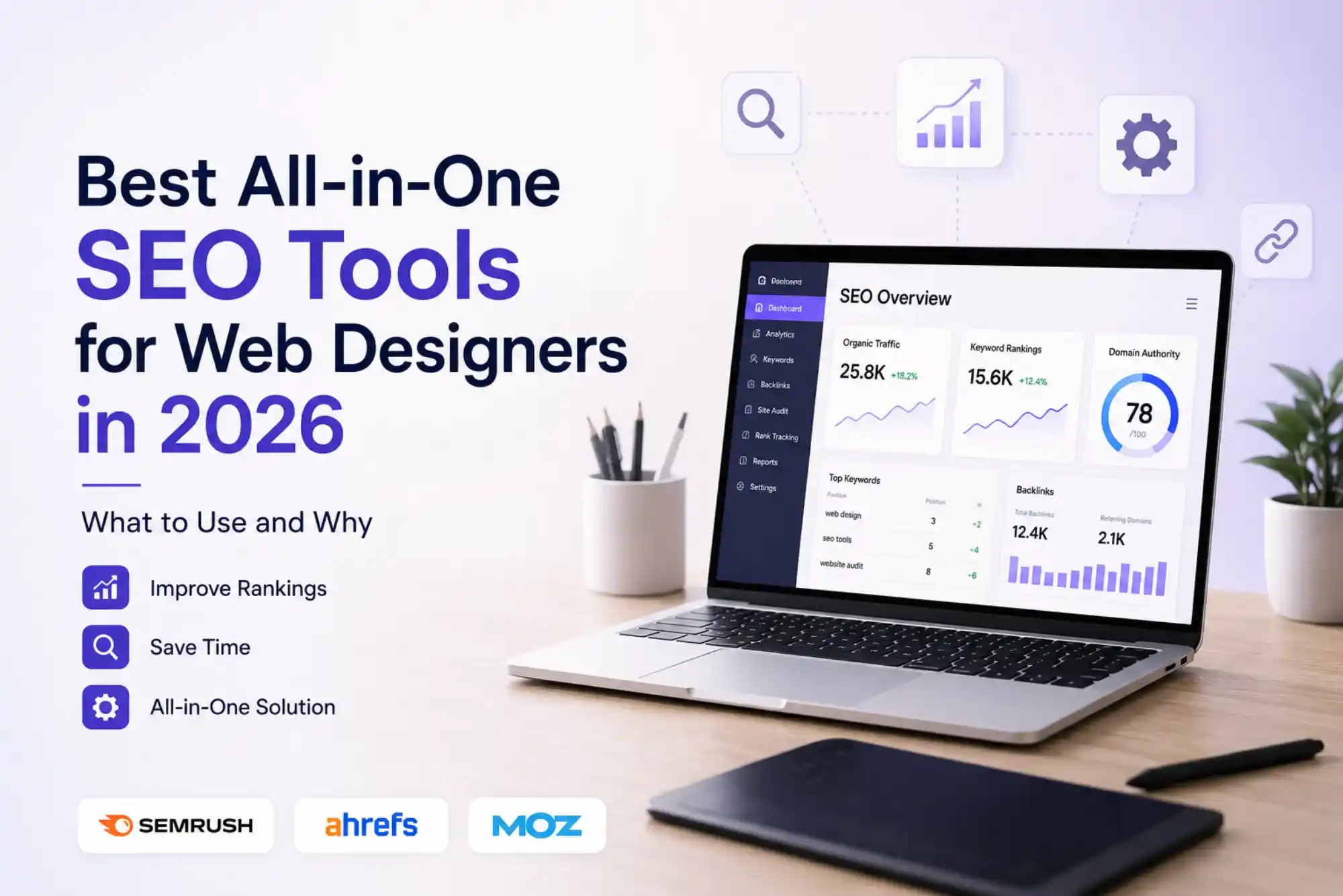
The best all-in-one SEO tools for web designers in 2026 are those that bridge creativity with performance. They help designers build websites that not only look exceptional but also rank competitively, load faster, and perform better across every device.
As businesses continue prioritizing digital visibility, designers who understand SEO are becoming significantly more valuable. Similar trends are shaping broader online business strategies discussed in modern SEO auditing approaches and evolving digital growth models across industries.
The New Role of SEO in Modern Web Design
There was a time when SEO was handed off to marketers after a website launched. That separation no longer works. Search engines now evaluate user experience signals with incredible sophistication. Layout stability, page speed, mobile responsiveness, structured content, and navigation clarity directly influence rankings.
For designers, this means SEO decisions begin during wireframing — not after development is complete.

Headers affect crawlability. Typography impacts readability and dwell time. Image compression influences Core Web Vitals. Even design hierarchy can affect how search engines interpret page relevance.
The result is a growing demand for integrated SEO platforms that support both creative and technical workflows in one place.
Why All-in-One Platforms Are Dominating in 2026
The biggest advantage of all-in-one SEO tools is efficiency. Designers are often balancing client communication, layout revisions, CMS management, performance optimization, and analytics simultaneously. Switching between six disconnected tools creates friction, especially on larger projects.
Today’s leading SEO suites combine:
- Technical audits
- Keyword research
- Competitor analysis
- Performance monitoring
- Backlink tracking
- Content optimization
- UX and speed analysis
For freelance designers and agencies alike, consolidation reduces complexity while improving consistency across projects.
Semrush Remains the Industry Standard for Multi-Layer SEO
Semrush continues to dominate because it understands how modern websites operate. It is no longer just an SEO platform; it functions as a complete digital visibility system.
For web designers, its value lies in the ability to identify technical weaknesses before they become ranking problems. Designers can quickly audit broken internal structures, duplicate metadata, mobile usability concerns, and crawl issues directly from a centralized dashboard.
Its content optimization features are especially useful during redesign projects. Instead of rebuilding pages blindly, designers can analyze existing ranking data and preserve the architecture already performing well in search.
Semrush also integrates effectively with collaborative agency workflows, making it ideal for teams handling both design and marketing.
Ahrefs Is Still the Strongest Choice for Competitive Intelligence
While many platforms offer overlapping features, Ahrefs remains exceptional at understanding how websites gain authority online.
Designers working on competitive niches — especially e-commerce, SaaS, publishing, or local business sites — benefit from Ahrefs because it reveals what already works in a market.
Its backlink database remains one of the most trusted in the industry, but the real strength for designers is structural insight. By studying top-performing competitor pages, designers can better understand content hierarchy, internal linking patterns, and page experiences that support higher rankings.
In 2026, SEO is deeply connected to user behavior. Ahrefs helps designers reverse-engineer successful digital experiences rather than relying on assumptions.
Surfer SEO Is Transforming Design Decisions Through Content Intelligence
One of the biggest changes in modern SEO is the growing overlap between design and content strategy. A page layout that ignores content intent often underperforms, regardless of visual quality.
That is where Surfer SEO has become incredibly influential.
Instead of focusing only on rankings, Surfer analyzes how high-performing pages structure information. It evaluates headings, readability, semantic relevance, keyword distribution, and content depth.
For designers building landing pages or editorial layouts, this changes the design process itself. Sections become intentional. Navigation becomes clearer. Content blocks align more naturally with user intent.
The result is cleaner experiences that satisfy both search engines and human readers.
This broader connection between UX and retention is becoming increasingly important across digital industries, including trends explored in modern user retention strategies.
Framer and Webflow Are Quietly Becoming SEO Platforms
Traditional SEO tools are no longer the only players in the space. Website builders themselves are evolving rapidly.
Platforms like Webflow and Framer now include advanced SEO functionality directly within the design environment. Designers can manage schema markup, redirects, metadata, responsive optimization, lazy loading, and accessibility improvements without relying heavily on developers.
This matters because speed and simplicity increasingly determine project success.
In fast-moving agency environments, clients want websites launched quickly without sacrificing technical quality. Modern visual builders are responding by embedding SEO into the design workflow itself.
That convergence is likely to accelerate throughout 2026.
Screaming Frog Still Owns Technical SEO Auditing
Some tools are flashy. Others are indispensable.
Screaming Frog belongs firmly in the second category.
Even in 2026, experienced designers and SEO specialists continue using it because few tools offer the same depth of technical insight. It crawls websites the way search engines do, uncovering hidden structural problems that visual builders often miss.
For redesign projects, migrations, or enterprise websites, Screaming Frog becomes critical. Designers can identify redirect chains, broken resources, orphan pages, oversized images, duplicate headings, and indexing issues before launch.
While newer AI-powered tools simplify reporting, Screaming Frog remains trusted because of its precision.
AI-Powered SEO Is Reshaping the Workflow
Artificial intelligence is no longer an optional enhancement in SEO software. It is now embedded into almost every serious platform.
The difference in 2026 is that AI tools are becoming more predictive rather than reactive.
Instead of merely reporting errors, modern SEO systems now recommend:
- Improved page structures
- Better internal linking opportunities
- Content expansion gaps
- User experience improvements
- Search intent alignment
- Conversion optimization suggestions
For web designers, this creates faster decision-making during projects. Rather than waiting for post-launch data, designers can optimize proactively during development.
However, the best professionals still rely on human judgment. AI can suggest patterns, but understanding brand identity, audience emotion, and visual storytelling remains deeply human work.
The Growing Importance of Core Web Vitals
Google’s emphasis on user experience metrics continues to influence SEO priorities in 2026. Core Web Vitals are no longer treated as technical extras — they are central ranking signals.
That means web designers must pay close attention to:
Loading performance: Heavy animations, oversized media, and unoptimized scripts can dramatically reduce rankings.
Visual stability: Layout shifts damage both usability and search visibility.
Interaction responsiveness: Delayed inputs create friction that affects engagement metrics.
Tools like Google PageSpeed Insights and Lighthouse remain essential resources for identifying these problems early.
Google’s official documentation on performance optimization continues to provide valuable guidance for developers and designers alike: https://web.dev/explore/learn-core-web-vitals
Choosing the Right SEO Tool Depends on Your Workflow
There is no universally perfect platform because different designers work differently.
A freelance designer managing local business websites may prioritize simplicity and automation. A large agency handling multilingual enterprise projects will need advanced crawling, collaboration, and reporting systems.
Some professionals focus heavily on content-led SEO, while others prioritize technical performance and site architecture.
The smartest approach is not choosing the tool with the longest feature list. It is selecting the one that naturally integrates into your workflow without creating unnecessary friction.
That philosophy mirrors broader digital transformation trends affecting online businesses globally, including operational simplification strategies discussed in modern business infrastructure planning.
The Future of SEO Tools Will Be More Integrated Than Ever
The line between web design software, SEO platforms, analytics systems, and content optimization tools is rapidly disappearing.
In the coming years, designers will likely work inside unified ecosystems where SEO recommendations, AI-generated structure analysis, accessibility scoring, conversion optimization, and performance testing happen simultaneously during the design process.
This integration will fundamentally change expectations in the industry. Clients will no longer separate “design” from “SEO.” They will expect both by default.
That shift creates enormous opportunities for designers willing to expand beyond visual aesthetics and embrace search performance as part of the creative process.
Conclusion
The best all-in-one SEO tools for web designers in 2026 are not simply about rankings. They are about building smarter digital experiences.
Modern websites must perform beautifully across every level — visually, technically, structurally, and strategically. Tools like Semrush, Ahrefs, Surfer SEO, Screaming Frog, Webflow, and Framer are helping designers bridge that gap more effectively than ever before.
As SEO becomes increasingly connected to user experience and performance metrics, designers who understand optimization will continue gaining a competitive advantage in the global digital economy.
The future belongs to professionals who can combine creativity with measurable search performance — and the right SEO tools are becoming essential partners in that process.
FAQs
What is the best all-in-one SEO tool for web designers in 2026?
Semrush is widely considered one of the most complete platforms because it combines technical SEO, keyword research, content analysis, and performance monitoring in one ecosystem.
Do web designers really need SEO tools?
Yes. Modern SEO directly affects site structure, speed, mobile responsiveness, accessibility, and user experience — all areas closely connected to web design.
Which SEO tool is best for technical website audits?
Screaming Frog remains one of the most trusted tools for identifying crawl errors, broken links, duplicate content, and structural SEO problems.
Are AI-powered SEO tools reliable in 2026?
AI-powered SEO platforms are highly useful for automation and insights, but human oversight is still important for strategy, branding, and user-focused design decisions.
Can Webflow and Framer handle SEO effectively?
Yes. Both platforms now offer advanced SEO features including metadata control, responsive optimization, redirects, schema support, and performance improvements.
Related Reading: Affordable SEO Tools for Web Designers on a Practical Budget in 2026
Related Reading: Free vs Paid SEO Tools for Web Designers: Which Option Makes More Sense in 2026?